Everything you need before you visit.
Admission, trails, boats, accessibility, the new Visitor Center, volunteering, groups, and the practical details that help you plan your time at West Shore.
Planning Your Visit
How much does it cost to visit?
Admission is always free. Donations are welcome and go directly toward preserving the buildings, boats, archives, and collections.
When is the museum open?
West Shore is a seasonal museum. Check the museum’s Facebook page for current open dates, weekend hours, and special events before making a special trip.
Where is the museum located?
N5156 State Hwy M-35, Menominee, MI 49858. The museum is within Bailey Park, a Menominee County park on the Green Bay shoreline about 15 miles north of Menominee and 8 miles south of Cedar River. Watch for the museum signs on M-35 and follow the lane through the park.
How long does a visit take?
Most visitors spend one to two hours. If you plan to walk the nature trails, spend time at the shoreline, or have a picnic, allow two to three hours.
Is it a good stop on a drive north?
Yes. West Shore is directly off M-35 and is an easy place to stretch your legs, explore the grounds, see Green Bay, use modern restrooms in the Visitor Center, and learn something along the way.
How do I contact the museum?
Email info@westshorefishingmuseum.org. For current events and seasonal updates, visit the museum’s Facebook page.
What There Is to See and Do
What’s at the museum?
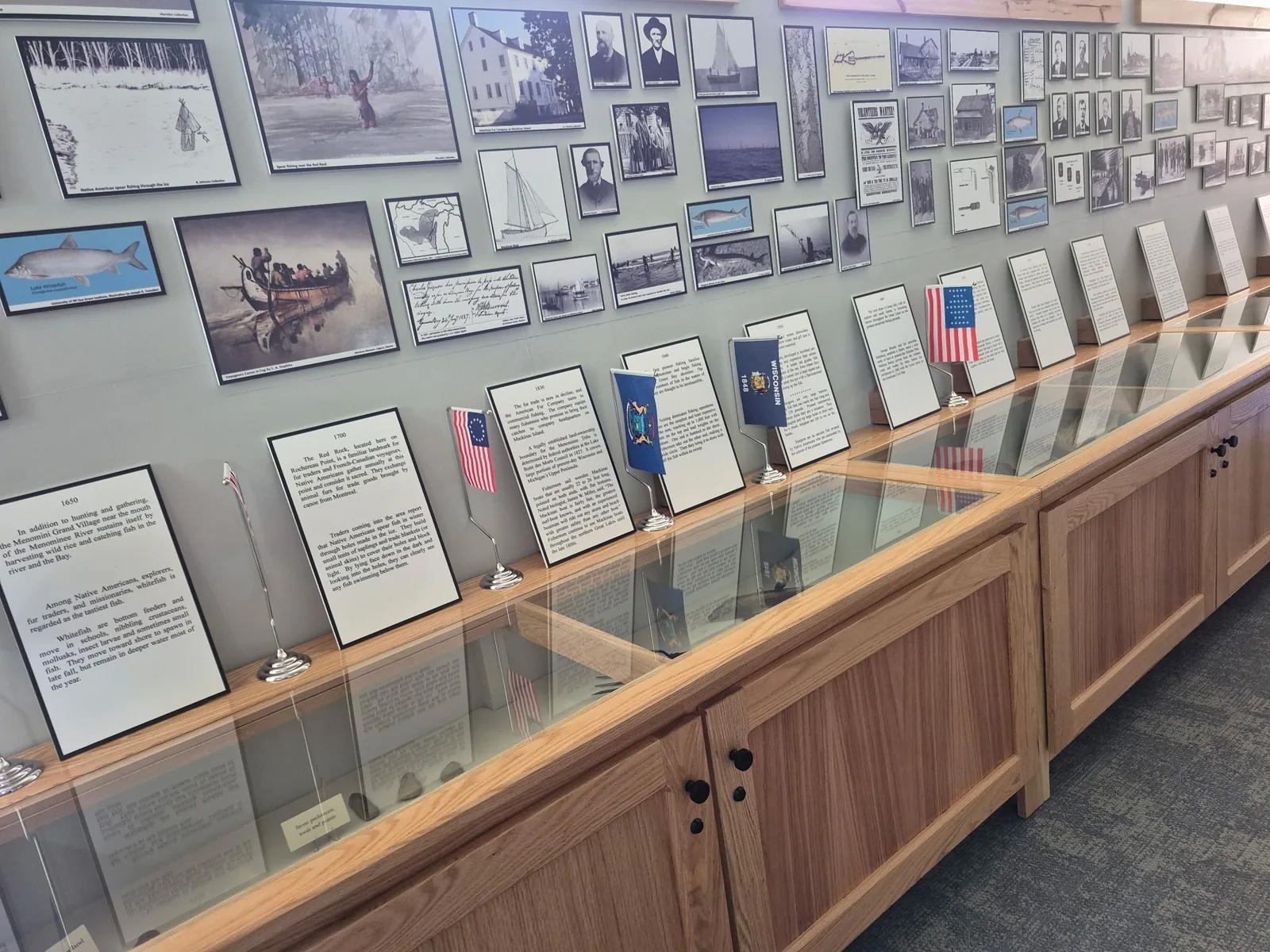
West Shore brings together the Bailey House, historic and modern fishing exhibits, working spaces, the Williams-Ruleau Visitor Center and local-history archive, nature trails, the boardwalk, picnic areas, shoreline access, and seven named fishing boats: Kate A, Mary Kay, Lucy R, Emma, Kathy, Judy, and Carey.
What is new at the Williams-Ruleau Visitor Center?
The Williams-Ruleau Visitor Center opened in summer 2026. Its Pioneer Room includes a video reel that moves through local history, and the center houses a local-history archive, gift shop, modern restrooms, and air conditioning.
What kinds of boats are on display?
The named boats include Kate A, a restored gill net tug; Mary Kay, a modern trap net boat; Lucy R, Emma, and Kathy, pond net boats; and Judy and Carey, all-purpose boats.
Is there a picnic area?
Yes. The grounds include picnic space, gardens, and shoreline access, so visitors are welcome to make a longer afternoon of their stop.
Can we go down to the water?
Yes. The property fronts Green Bay, with shoreline access, a boardwalk, Red Rock Trail, and a viewing area near Red Rock and Rochereaux Point.
What are the tar vats?
Before nylon, fishing nets were cotton or linen, and they rotted quickly underwater. Fishermen preserved them by dipping them in hot tar, which sealed the fibers, stiffened the mesh, and helped the net hang properly in the water. The tar wore off, so nets came ashore regularly to be mended in the twine shed and re-dipped in the vats. The recovered tar vats near Red Rock Trail are one of the museum’s newest exhibits.
Are there nature trails?
Yes. Trails wind through the property and connect visitors to woods, dunes and swales, the shoreline, and the museum’s broader natural setting.
Is there a gift shop?
Yes. The Williams-Ruleau Visitor Center includes the museum gift shop. Purchases help support the museum.
Are there restrooms?
Yes. The Williams-Ruleau Visitor Center, opened in summer 2026, has modern restrooms.
Is the museum good for kids?
Yes. Between the boats, historic buildings, shoreline, trails, picnic areas, and outdoor space, there is plenty for families to explore.
Is the museum wheelchair accessible?
The grounds are largely accessible and the Williams-Ruleau Visitor Center has modern facilities. Some historic buildings have steps. Email ahead if you need details about a specific building or route.
Is there a guided tour?
Volunteer docents are on site during open hours and share the museum’s stories. A five-stop self-guided mobile audio tour of the Bailey House is also available on your phone, along with a mobile grounds map.
About the Museum
What is the museum’s mission?
West Shore Fishing Museum preserves and portrays fishing life on the West Shore of Green Bay across prehistoric, pioneer, and modern eras.
Who were the Baileys?
Charles Bailey operated one of the area’s largest commercial fishing operations on this site from 1893 to 1950. The Bailey property was later preserved for use as a museum and natural area.
Who runs the museum?
The West Shore Fishing Museum is operated by the Bailey Property Preservation Association, a 501(c)(3) nonprofit public charity. The all-volunteer Association works with Menominee County, which owns the property and buildings.
Is the museum a nonprofit?
Yes. The Bailey Property Preservation Association is a registered 501(c)(3) nonprofit, classified by the IRS as a 509(a) public charity — supported by memberships, donations, and visitors rather than a private foundation. Donations are tax-deductible as allowed by law.
How can I support the museum?
Donations, gift shop purchases, memberships, and volunteer time all help support the museum’s mission. Email donations@westshorefishingmuseum.org to learn more or use the Support links on this site.
Can I volunteer?
Yes. West Shore is volunteer-run and welcomes help with visitor welcome, grounds work, events, boats and artifacts, archives, and behind-the-scenes projects. Email volunteer@westshorefishingmuseum.org to get started.
Events and Groups
Does the museum host events?
Yes. Seasonal events and special programs are announced on the museum’s Facebook page. Questions about an event or a program idea can go to events@westshorefishingmuseum.org.
Can we bring a group or school class?
Groups are welcome. Email events@westshorefishingmuseum.org ahead of your visit so volunteers can help plan for your group.
Nearby and Affiliated
What else is nearby?
The museum is on M-35 between Menominee and Cedar River, with communities and parks along the Green Bay shoreline nearby. Menominee, Michigan and Marinette, Wisconsin offer food and lodging options.
Is the museum part of any larger trail or organization?
Yes. West Shore Fishing Museum is part of the Great Lakes Fisheries Heritage Trail, is an affiliate of the Menominee County Historical Society, and is a Michigan Registered Historic Site.
Still have a question?
West Shore is run by volunteers, and they are happy to help you plan a visit.
Email
info@westshorefishingmuseum.org
Current events & seasonal updates
Facebook →